
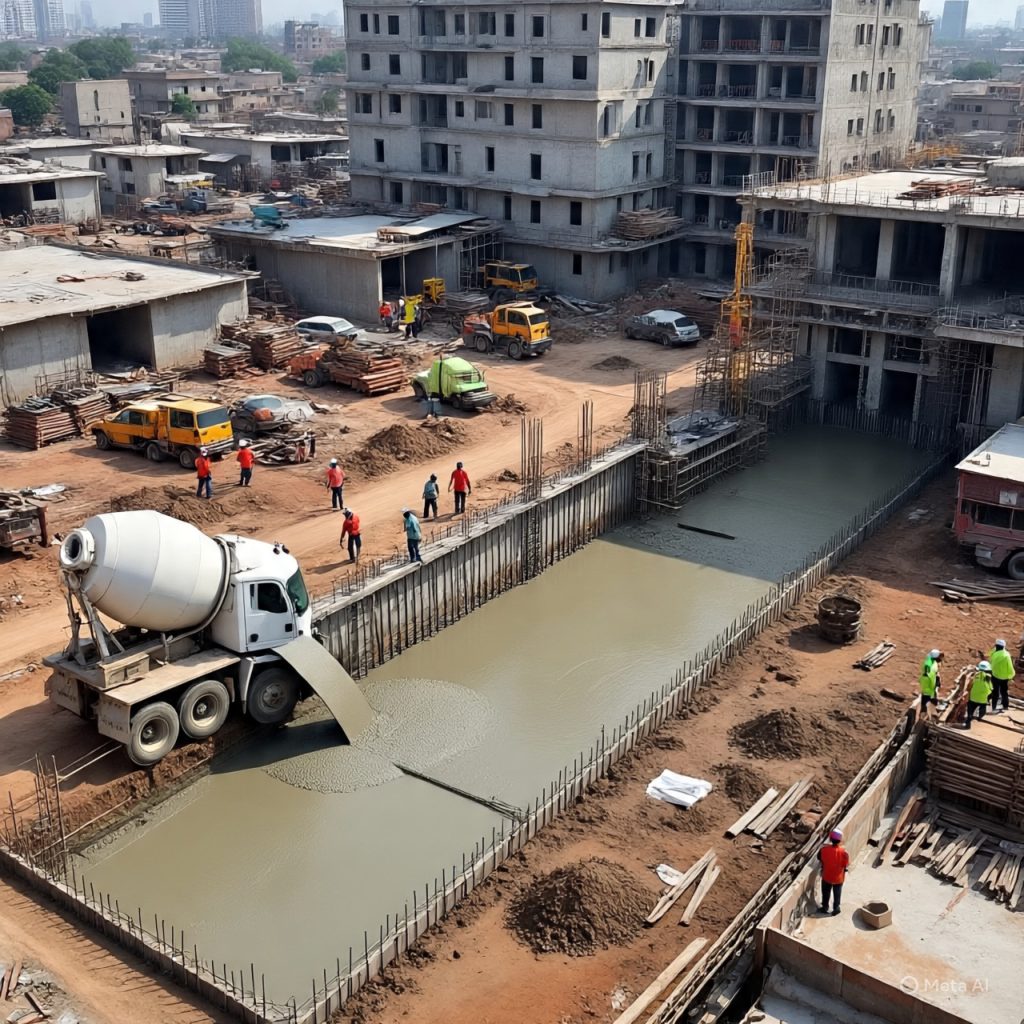
Water is patient. It doesn’t force its way through concrete and steel in dramatic fashion. Instead, it seeps, penetrates, and accumulates over months and years, silently compromising the very bones of our buildings. By the time we notice the stains on the ceiling or the cracks spreading across the basement wall, the damage has already cost far more than prevention ever would have.
For those of us in construction, this reality presents a fundamental question: Why do we continue to treat waterproofing as an afterthought when every project tells us it should be a foundation-level priority?
The True Cost of Deferred Waterproofing
Let’s talk numbers first, because that’s the language of project budgets and feasibility studies. The construction industry has long operated under a troubling assumption that waterproofing can be value-engineered out during tight budget cycles and addressed later if problems arise. This thinking is not just flawed, it’s financially reckless.
Consider a typical scenario. During the design phase, a developer opts for a basic damp-proof membrane instead of a comprehensive waterproofing system to save approximately 2-3% of the foundation costs. Fast forward three years: water ingress has damaged interior finishes, compromised the structural integrity of the foundation, and created conditions for mold growth. The remediation cost? Often 10 to 15 times the original savings, not counting business interruption, tenant displacement, or reputational damage.
I’ve watched projects where a #1million investment in proper waterproofing at the foundation stage would have prevented #10 million in repairs down the line. The mathematics is brutal and unforgiving. Water damage doesn’t just cost money to fix; it multiplies exponentially because you’re not just repairing the waterproofing anymore. You’re replacing damaged concrete, remediating mold, fixing electrical systems, replacing insulation, and restoring finishes. You’re essentially building twice.
Where Structural Failure Begins
The relationship between water infiltration and structural degradation is more insidious than many realize. Concrete, for all its compressive strength, is a porous material. When water penetrates concrete, especially in the presence of chlorides or sulfates from soil or groundwater, it initiates a cascade of destructive processes.
Steel reinforcement begins to corrode when exposed to moisture and oxygen. As the steel oxidizes, it expands, creating internal pressure that causes concrete to crack and spall. These cracks then provide even easier pathways for water, accelerating the cycle. What starts as minor seepage becomes a structural compromise. I’ve seen parking structures where column reinforcement was so corroded that the load-bearing capacity was reduced by over 40%, all because water was allowed consistent access through inadequate waterproofing at the slab level.
Foundation walls face similar threats. Hydrostatic pressure from saturated soil pushes water through any weakness in the waterproofing system. Over freeze-thaw cycles, that moisture expands and contracts, creating microfractures that grow into structural cracks. In basement and below-grade construction, this isn’t a theoretical risk, it’s an inevitability without proper waterproofing.
The critical point here is timing. Once a structure is enclosed and occupied, accessing the foundation for proper waterproofing becomes exponentially more complex and expensive. You can’t just apply a membrane to the outside of a basement wall when there’s already a building sitting on top of it and landscaping surrounding it. Your options become limited to expensive injection systems, interior drainage solutions, or in extreme cases, excavation and reconstruction.
Building Protection Into the Structure: A Systematic Approach
The evidence is clear: early waterproofing decisions are among the most critical choices made during a construction project. But knowledge without application remains theoretical. What the industry needs are proven, systematic approaches that integrate waterproofing protection from the foundation up.
At our company, we’ve developed a comprehensive early-stage waterproofing strategy that addresses the vulnerabilities we’ve discussed, protecting structures at the most critical phase when intervention is still cost-effective and permanent.
The Foundation Stage: Integral Waterproofing
For projects with high groundwater tables or hydrostatic pressure conditions, the most effective approach begins within the concrete itself. Armorkrystal 600 Plus, our crystalline waterproofing powder, is integrated directly into the concrete mix during batching. This isn’t surface protection, it’s molecular-level waterproofing that becomes part of the structural element itself.
Here’s why this matters during early construction. When you’re pouring foundation slabs and walls in saturated soil conditions or below the water table, you’re fighting hydrostatic pressure from day one. A crystalline admixture works by reacting with moisture and unhydrated cement particles to form insoluble crystals that fill the capillary pores and microcracks in concrete. The result is concrete that self-seals, even micro-cracks up to 0.4mm that develop over time.
The beauty of this approach is permanence. Unlike surface-applied membranes that can be damaged during construction or degrade over time, crystalline waterproofing becomes a permanent part of the concrete matrix. If cracks develop years later due to settlement or structural movement, the crystalline compounds reactivate in the presence of moisture, continuing to protect the structure throughout its design life.
For projects in high water table environments, coastal areas, or sites with aggressive groundwater conditions, this integral protection provides the first line of defense. It’s the foundation of building it right from the start.
Protecting the Weak Points: Water-stops for Construction Joints
Before we even talk about external membranes, there’s a critical vulnerability that must be addressed during the concrete pour itself: construction joints. These are the planned breaks between concrete pours, and they represent one of the most common failure points in foundation waterproofing.
Think about it. You’re pouring a foundation wall in sections, or connecting a wall to a slab. Those joints are natural pathways for water infiltration under hydrostatic pressure. A membrane on the surface won’t help if water is traveling through the joint itself.
This is where water-stops become non-negotiable. We provide two proven solutions depending on your project conditions:
PVC Water stops are ideal for construction joints where precision and reliability are paramount. Installed at the centre of the concrete section during the pour, they create a continuous physical barrier that blocks water passage through the joint. They’re particularly effective in water-retaining structures, basements with high water tables, and anywhere you need guaranteed performance under sustained hydrostatic pressure.
Swellable Water bars offer a different advantage: they’re hydrophilic, meaning they expand when they contact water, creating a compression seal within the joint. They’re easier to install than PVC waterstops, more forgiving of minor installation imperfections, and excellent for complex joint geometries. When water reaches the water bar, it can swell up to several times its original size, creating an impermeable seal that stops water migration.
The choice between PVC water stops and swellable water bars depends on your specific conditions: the expected hydrostatic pressure, joint movement, potential, installation complexity, and contractor experience. Often, the best approach uses both types strategically throughout a project where conditions vary.
What’s critical is this: water stops must be specified during structural design and installed during the concrete pour. You cannot retrofit them effectively. This is the definition of getting it right from the start. Miss this step, and you’ve left a permanent weak point in your waterproofing system, no matter how good your membranes and coatings are.
External Protection: The Critical Barrier
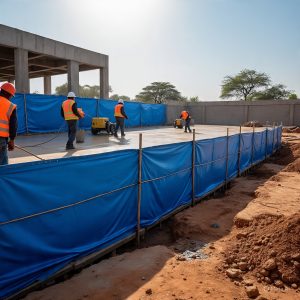
Once foundation walls are cast and cured, with water stops properly installed at all construction joints, there’s a narrow window of opportunity to apply external waterproofing that will be virtually impossible to access later. This is where many projects make the costly mistake of rushing or cutting corners.
Armorseal 200, our liquid-applied bitumen membrane, provides a robust, seamless barrier on the exterior face of foundation walls. Applied during this critical pre-backfill stage, it creates a flexible, monolithic waterproofing layer that bridges gaps, conforms to surface irregularities, and provides long-term protection against water infiltration and root penetration.
The application timing is everything. Once backfill is placed, you will lose access to the exterior of the foundation wall. Any waterproofing deficiencies become expensive problems that require interior remediation or costly excavation. By specifying and installing a high-performance membrane like Armorseal 200 at this stage, you’re creating a permanent protective envelope around the foundation when it’s still accessible and cost-effective to do so.
The liquid application ensures complete coverage around complex geometries, penetrations, and details where sheet membranes might leave vulnerable gaps. It’s particularly effective in areas where the foundation steps or where there are numerous utility penetrations, situations that challenge conventional waterproofing systems.
Interior Protection: The Final Defense Layer
For basement floors and walls, particularly in occupied spaces where water infiltration would cause immediate damage and disruption, we recommend Armorcoat 1C, our single-component crystalline waterproofing coating membrane. Applied to interior concrete surfaces, it provides negative-side waterproofing that can withstand hydrostatic pressure while allowing the concrete to breathe.
This is your insurance policy against the unexpected. Even with integral waterproofing and external membranes in place, interior crystalline coatings provide redundant protection for critical below-grade spaces. In basement parking areas, storage rooms, or occupied spaces, this coating prevents water vapor transmission, resists chemical attack from aggressive groundwater, and provides a durable, maintainable finish.
The crystalline technology means that Armorcoat 1C doesn’t just sit on the surface; it penetrates into the concrete substrate and becomes part of the protective system. It can be applied to green concrete, it doesn’t require perfectly dry substrates, and it continues to develop waterproofing properties as it cures. For construction schedules, this flexibility is invaluable.
The Integrated System Advantage
What separates successful waterproofing from eventual failure is understanding that these aren’t competing solutions; they’re complementary layers in a comprehensive protection strategy. Projects with challenging conditions benefit from a defense-in-depth approach:
Integral protection (Armorkrystal 600 Plus) makes the concrete itself water-resistant and self-sealing. Joint protection (PVC Water stops and Swellable Water bars) stops water migration through construction joints and connections. External protection (Armorseal 200) provides a robust barrier against water infiltration and hydrostatic pressure. Interior protection (Armorcoat 1C) offers redundant defense and protects occupied spaces.
Each layer addresses different vulnerabilities and provides backup if another layer is compromised. This is how you build resilience into structures from the foundation stage, when these interventions are routine parts of construction rather than expensive retrofits.
The Path Forward: Building It Right from the Start
The evidence is overwhelming: early waterproofing decisions affect structural performance, long-term costs, building value, and owner satisfaction more than almost any other single factor. But evidence alone doesn’t change industry practice. What changes practice is having proven solutions that can be implemented during normal construction sequencing without extraordinary cost or complexity.
This means bringing waterproofing expertise into projects during feasibility and design development, not just during construction documentation. It means educating clients about the long-term value proposition of robust, integrated waterproofing systems. It means writing specifications that emphasize performance and system integration over initial cost. It means selecting contractors based on qualifications and experience with advanced waterproofing technologies.
Most importantly, it means recognizing that we have a professional obligation to build structures that will perform as intended throughout their design life. Water infiltration and its consequences are preventable. We have the knowledge, materials, and techniques to build water-resistant structures. The question is whether we’ll make the decisions necessary to implement them when it matters most, right from the start.
Every project is an opportunity to build it right. The foundation stage is not just the beginning of construction; it’s where we set the trajectory for a building’s entire lifecycle. Get the waterproofing right at this stage, and you’re building success into the structure. Cut corners now, and you’re building in failure that will only reveal itself when it’s far more expensive to address.
We’re here to help you make those critical early decisions with confidence. Our technical team works with architects, engineers, and contractors during the design and planning phases to develop waterproofing strategies tailored to specific site conditions, building use, and performance requirements. Because the best time to prevent water infiltration isn’t when you discover a problem, it’s before the first concrete is poured.
The choice is yours to make, but the consequences belong to the buildings we leave behind. Choose to build it right from the start.